The apartment did not contain the staircase, the staircase contained the apartment.
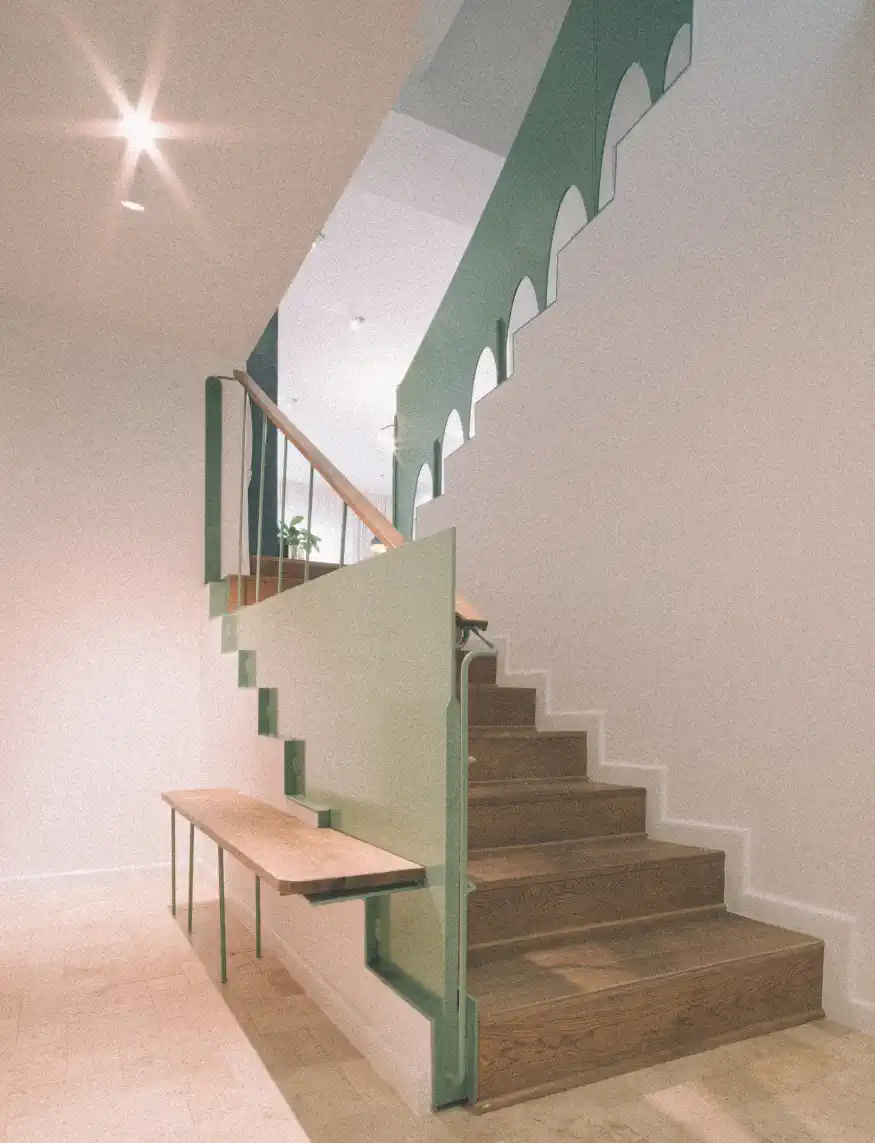
In this apartment, the staircase is not treated as a necessary interruption between two levels, nor as a purely functional object compressed into the margins of the plan. Instead, it becomes the project’s central architectural event: a metal spine around which the domestic interior gathers, unfolds and finds its rhythm. It is less a staircase than a vertical promenade — a constructed axis of movement, light and color, where the everyday choreography of the home is gently staged.
The intervention is defined by a quiet but deliberate inversion. The apartment does not simply contain the staircase; rather, the staircase appears to contain the apartment. Its presence organizes the visual field from almost every angle. It guides the eye, divides and connects spaces, and introduces a sense of continuity between rooms that might otherwise feel independent. Moving through the flat, one repeatedly returns to this element, as if to a central reference point. It is both infrastructure and ornament, circulation and identity.
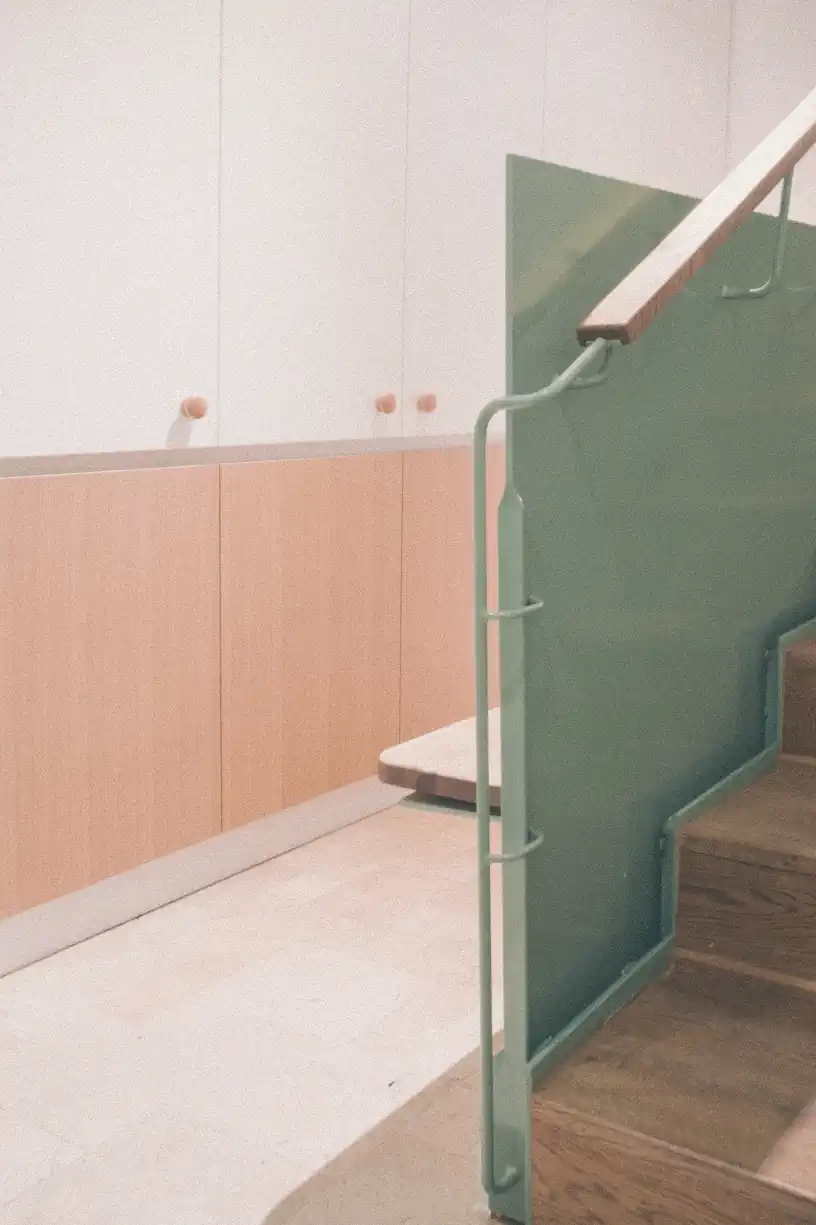
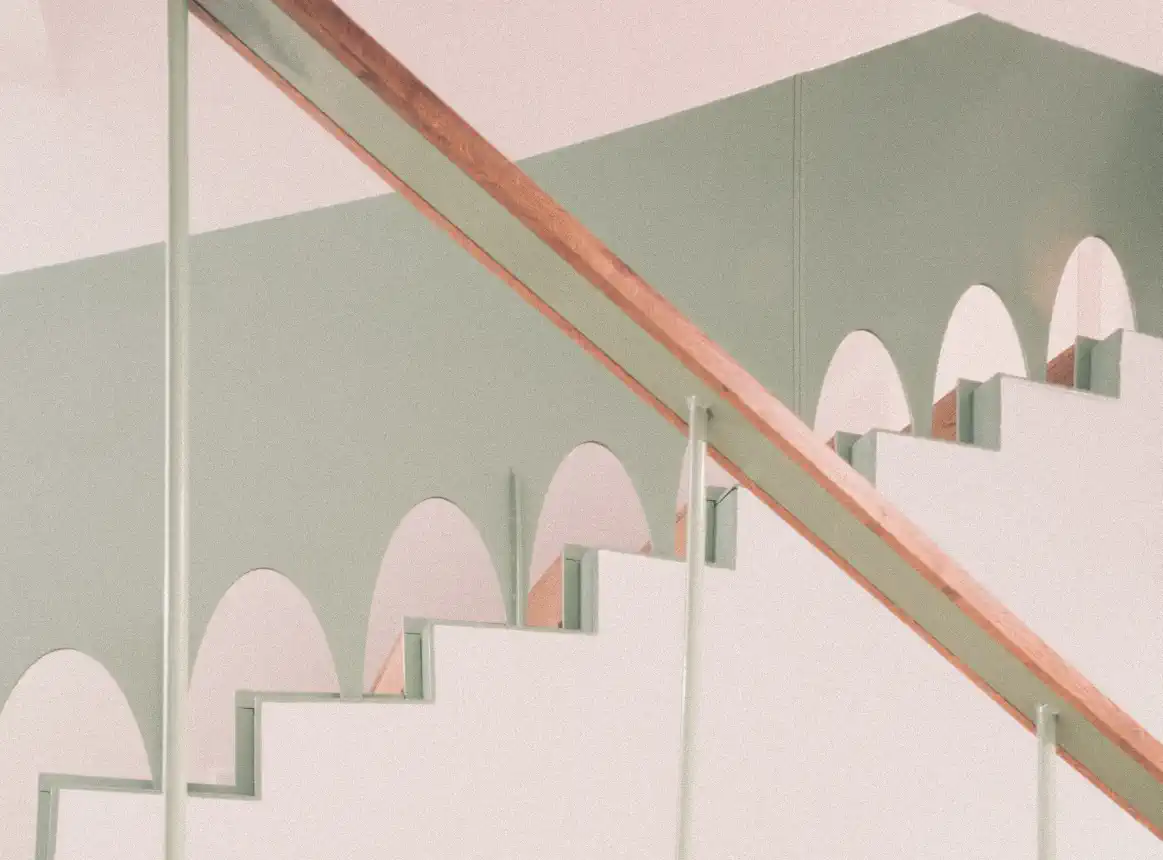
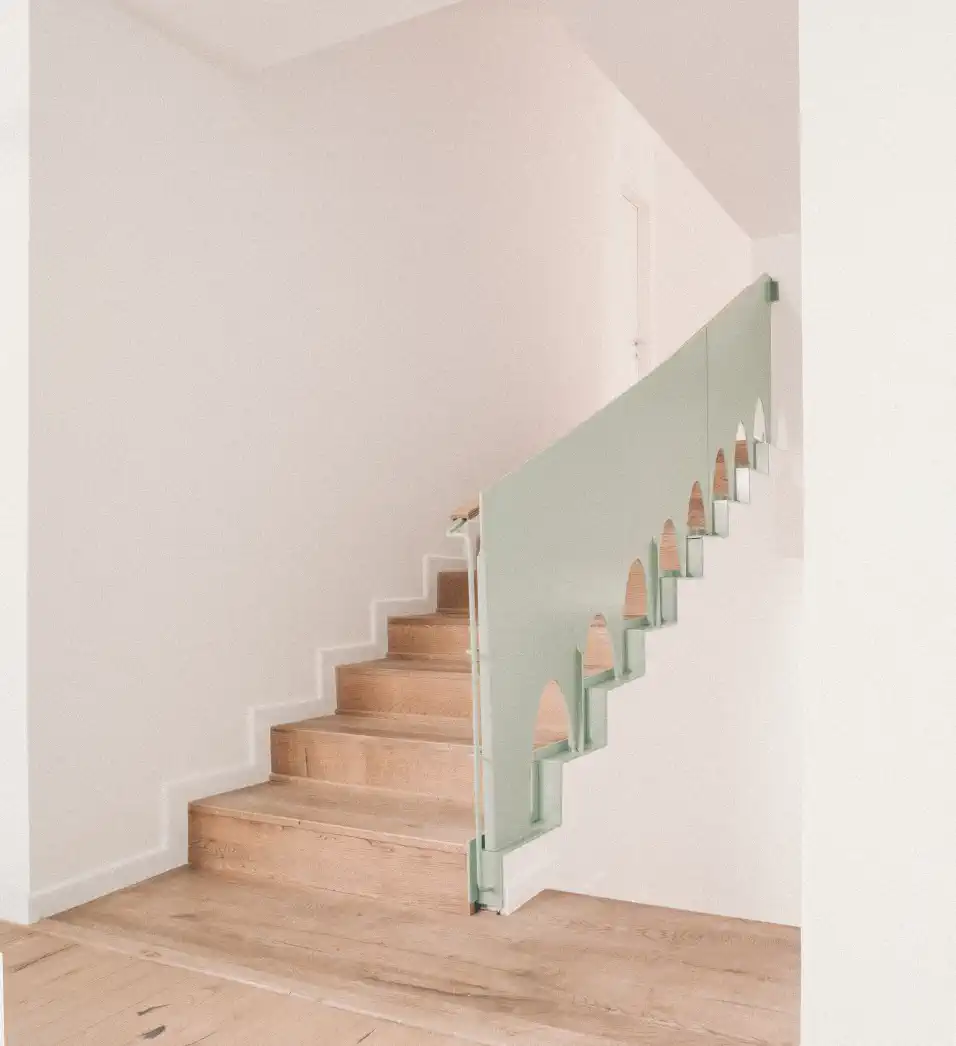
The metal balustrade, painted in a soft green tone, gives the project its most distinctive gesture. Its silhouette follows the incline of the stairs in a stepped rhythm, then opens into a sequence of rounded cut-outs, almost like architectural arches abstracted into a domestic scale. These openings soften the otherwise precise geometry of the metal sheet.
They bring playfulness without excess, creating a dialogue between the industrial language of the material and the gentle character of the home. The result is a staircase that feels sculptural, but never theatrical.
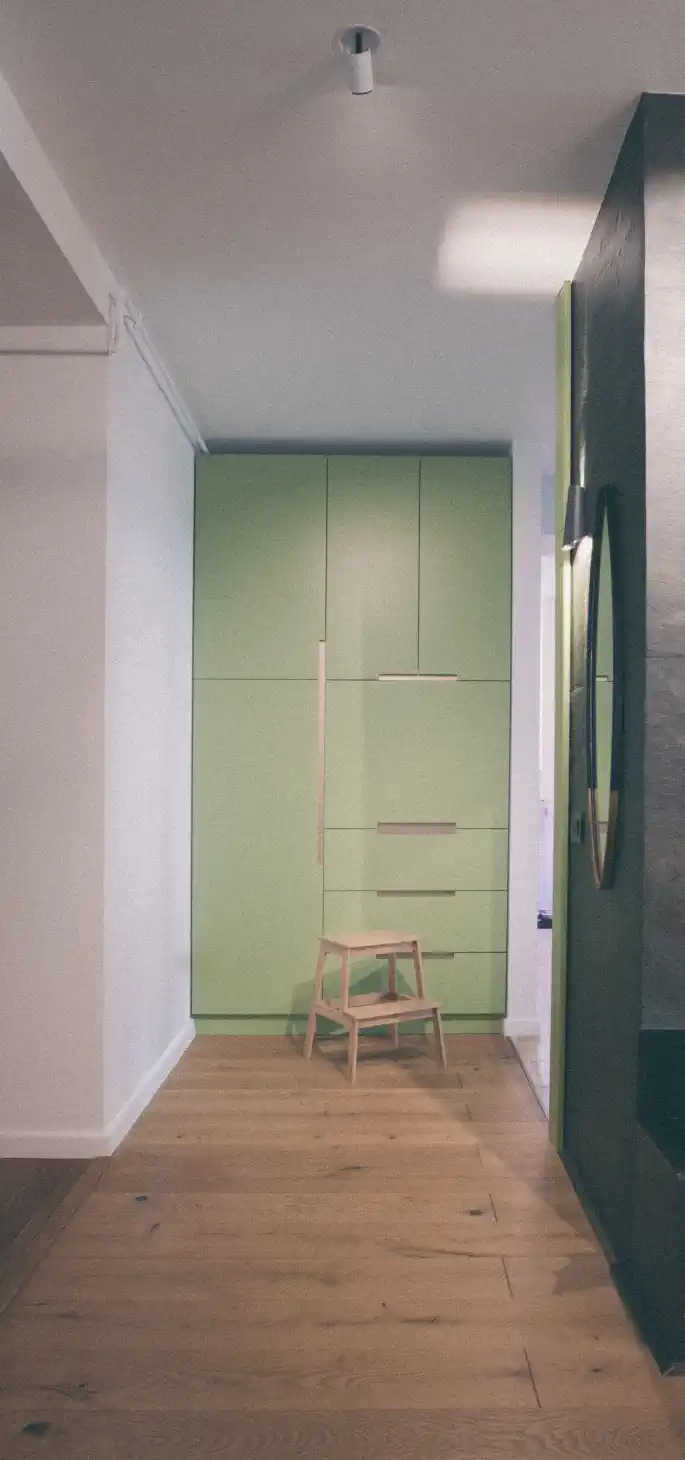
Color is used with restraint, yet it carries the emotional weight of the design. The green of the staircase does not remain isolated. It spills carefully into the apartment, appearing in built-in furniture, wall planes and selected details. In the cabinetry, the same muted tone becomes calmer and more domestic, transforming from structural accent into storage surface. Elsewhere, complementary shades appear in softer forms: warm wood, pale pinks, earthy browns, ivory textiles and the occasional darker note. The palette is not decorative in the conventional sense. It behaves more like an atmosphere, connecting spaces through echoes rather than statements.
This approach is particularly visible in the relationship between the staircase and the surrounding furniture. The warm wooden steps and handrail temper the coolness of the painted metal, while the oak flooring carries that warmth throughout the apartment. The bench placed along the lower stair wall turns circulation into pause, suggesting that the staircase is not only a path but also a place. It accommodates the routines of arrival, waiting, sitting, looking, passing through. In doing so, it becomes part of daily life rather than a sculptural object to be admired from a distance.
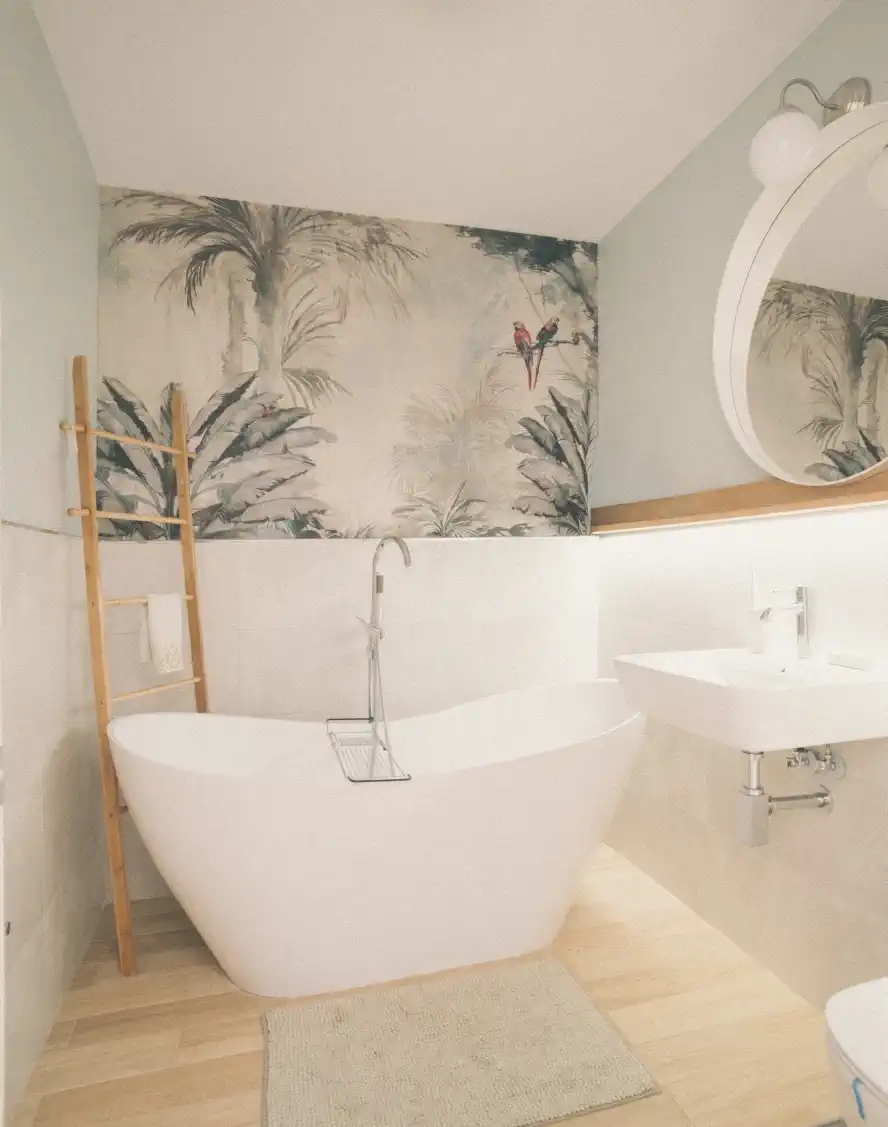
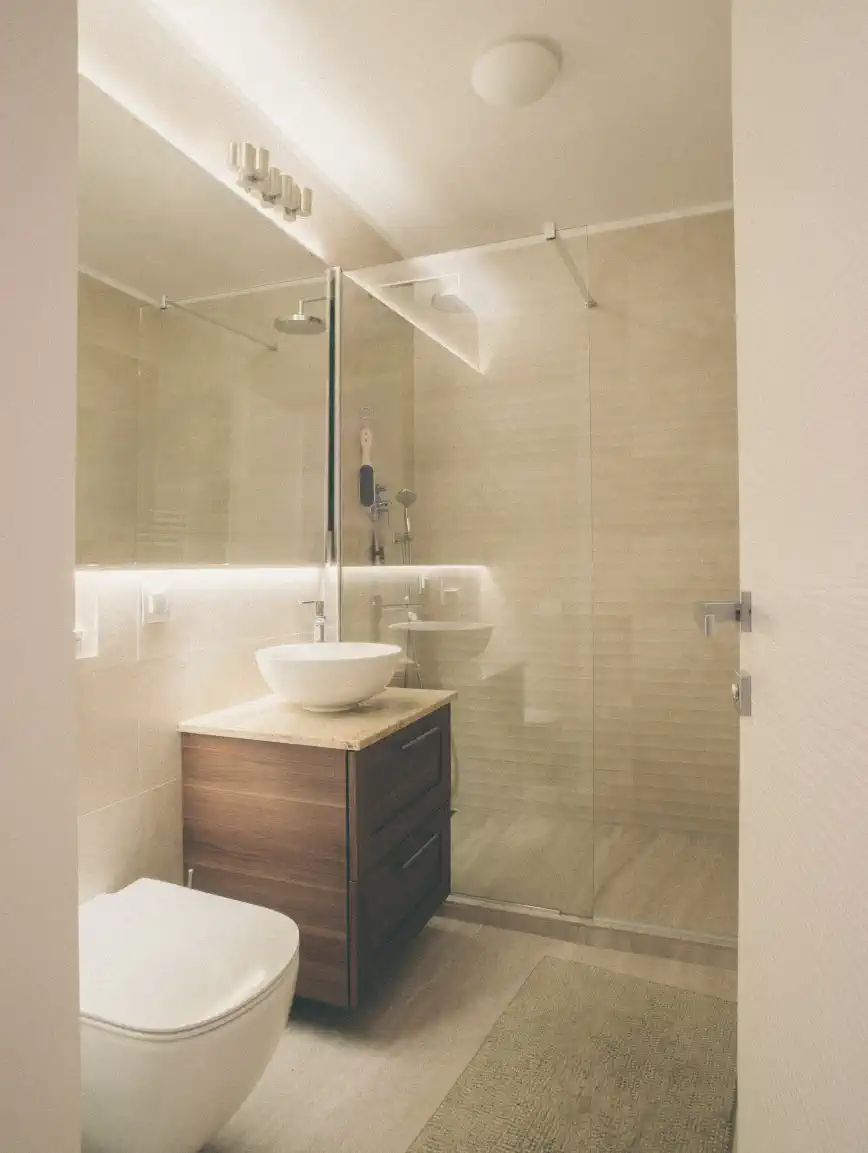
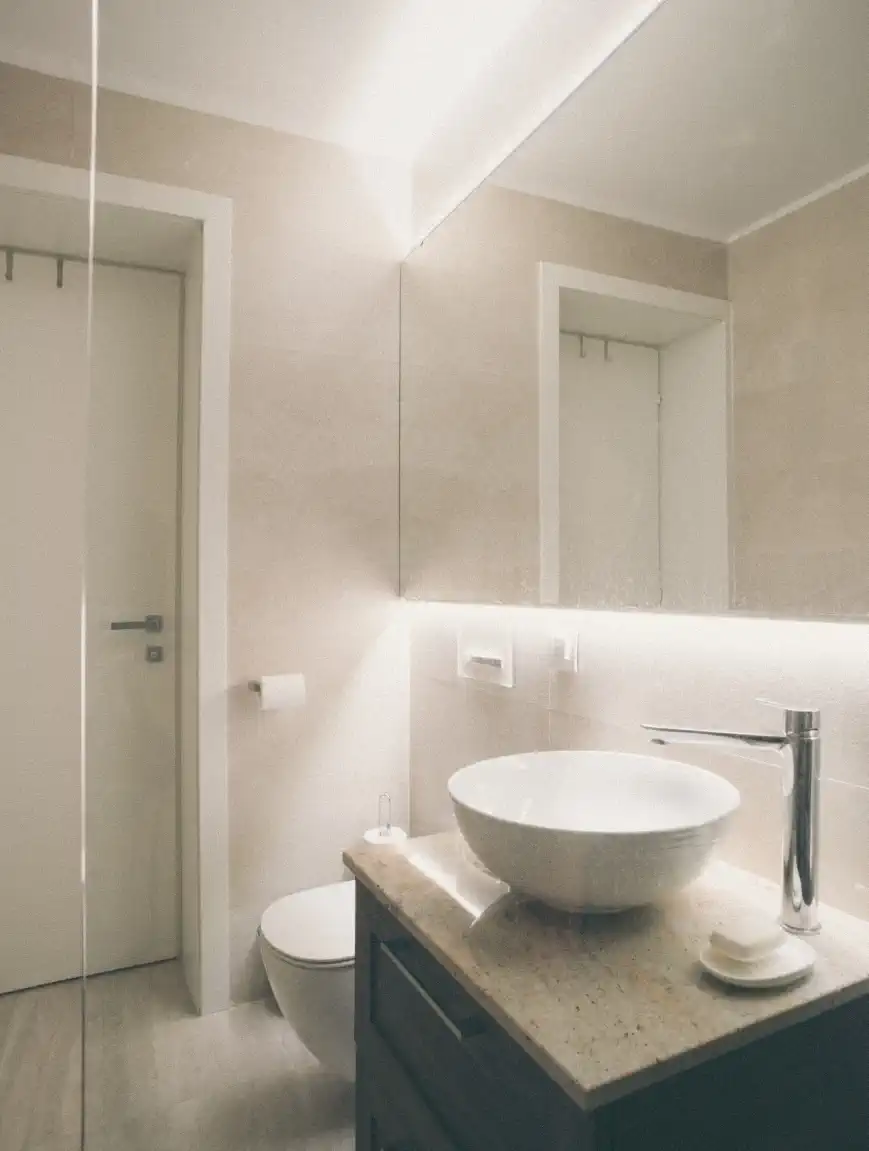
The apartment’s interiors are intentionally calm. White walls, light floors and large reflective surfaces create a soft envelope around the stronger architectural gestures. In the bathrooms, this language becomes more minimal and luminous. Glass partitions, large mirrors and under-cabinet lighting expand the sense of space, while stone-like surfaces and wooden vanity units introduce a tactile warmth. One bathroom remains restrained and spa-like, almost monochrome in its quietness; another introduces a botanical wall covering, allowing the project’s subtle playfulness to reappear in a more intimate room. The tropical motif does not feel like a rupture, but like a private variation on the apartment’s broader interest in softness, nature and controlled fantasy.
The living areas continue this balance between simplicity and character. Furniture is light, contemporary and unforced. A lounge chair, a slim metal coffee table, a large indoor plant and a softly curved floor lamp create a composition that feels lived-in without becoming cluttered. The apartment avoids the sterile perfection often associated with minimalism. Instead, it accepts warmth, texture and small domestic traces: books, fabric, plants, filtered light, the grain of wood, the shadow of a curtain. These details give the interior a human scale.
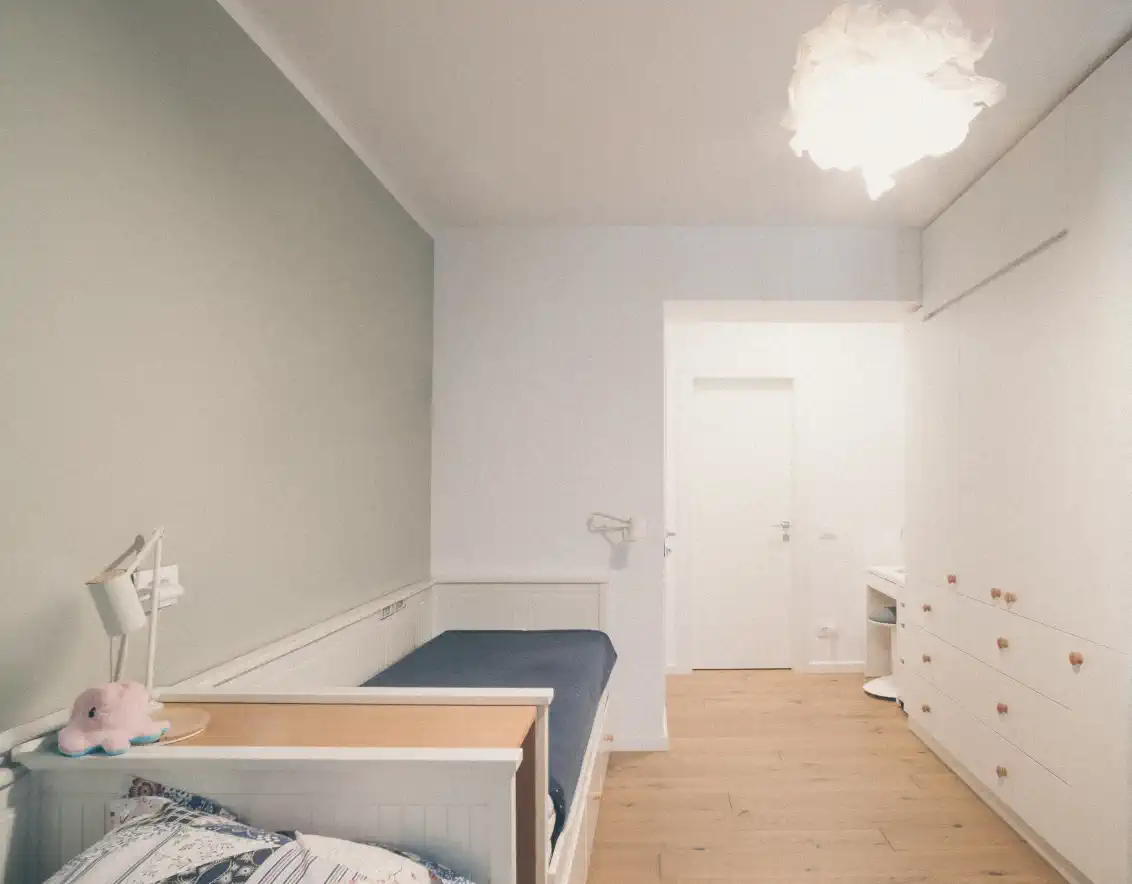
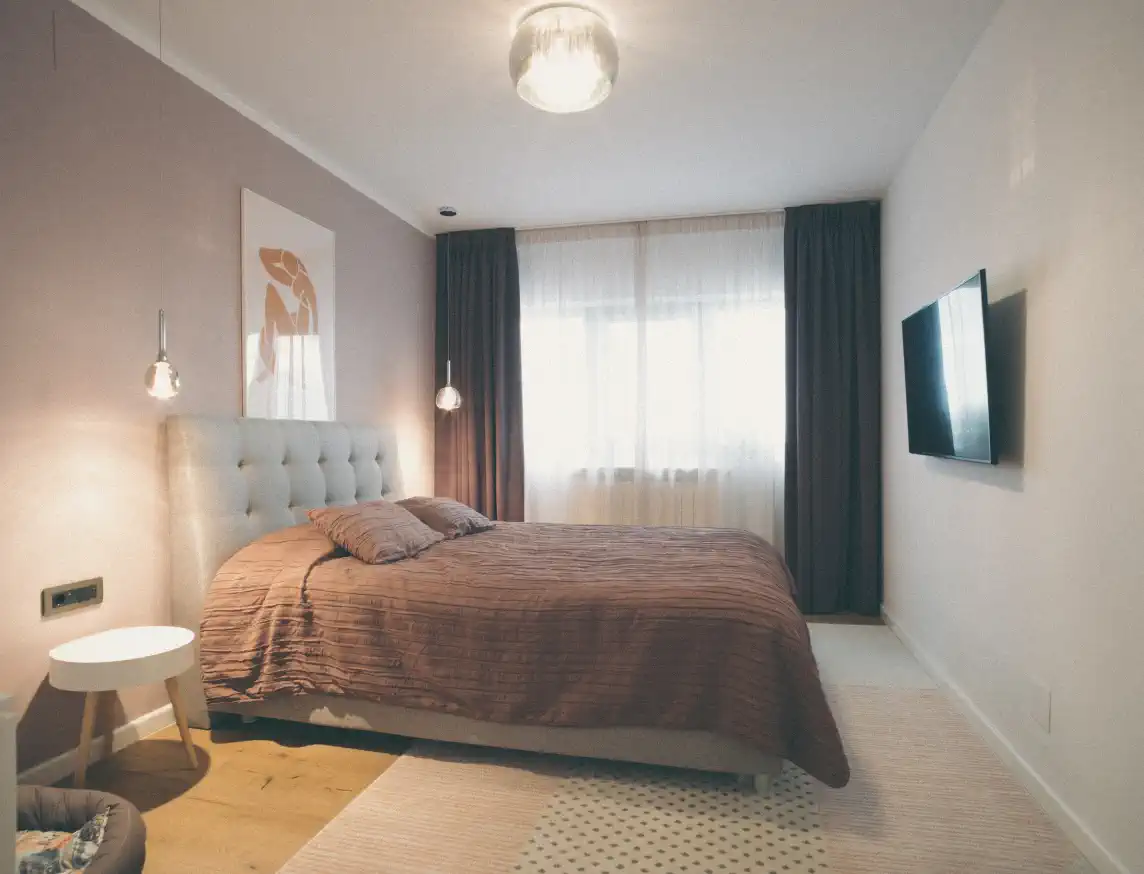
In the bedrooms, the atmosphere becomes quieter and more tactile. The adult bedroom uses warm neutrals, a soft upholstered headboard, deep curtains and simple lighting to create a sense of retreat. The bed anchors the room, while the wall-mounted television and pared-back furniture keep the composition clean. The children’s room, by contrast, introduces a more narrative quality through playful objects, small colored handles and a built-in bed structure. Even here, however, the design remains disciplined. The room is gentle rather than loud, imaginative without being visually overstimulating.
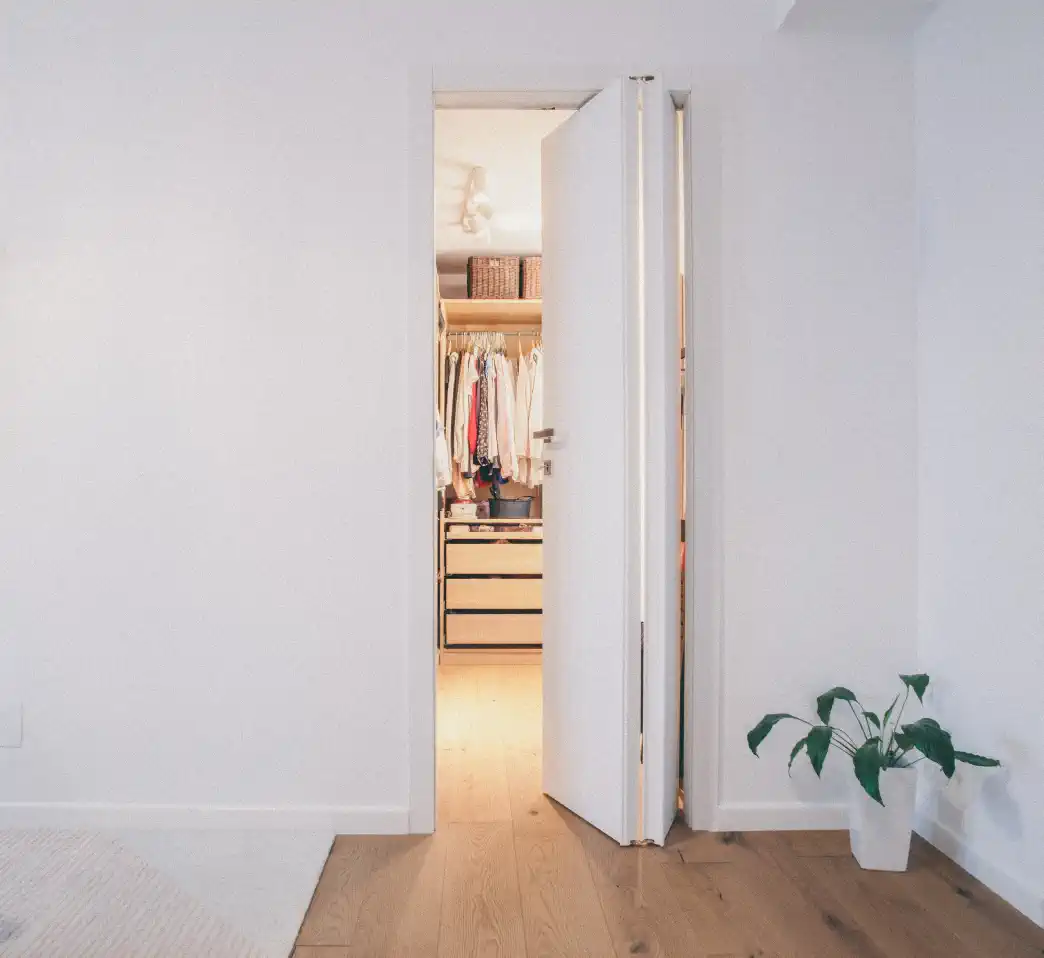
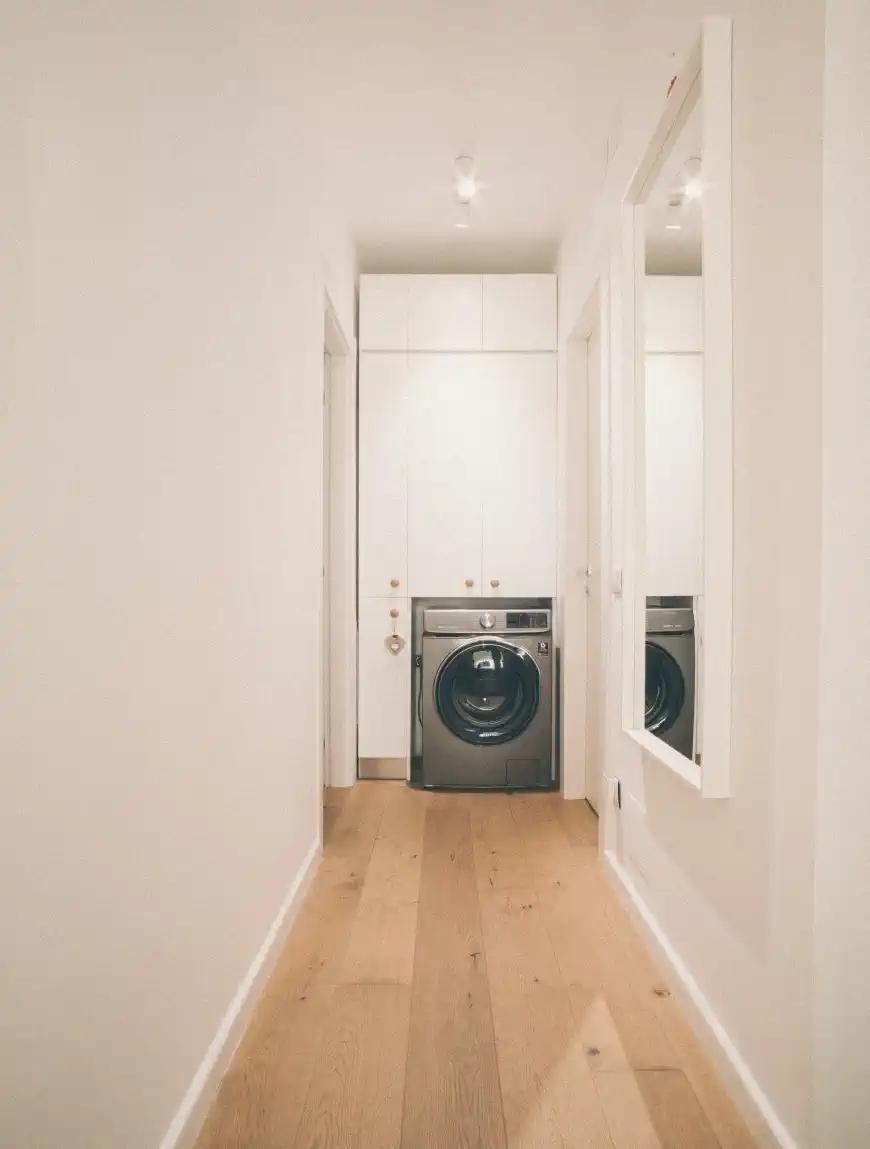
Throughout the flat, storage is integrated with notable discretion. Tall wardrobes, built-in cabinetry and concealed utility areas allow the apartment to remain visually calm. The washing machine is absorbed into a white storage wall, the dressing room is hidden behind simple doors, and the hallways remain bright and uncluttered. This clarity reinforces the importance of the staircase: because the surrounding architecture is controlled, the metal spine can become expressive without overwhelming the home.
What makes the project compelling is not the staircase alone, but the way its language is allowed to migrate. The green metal, the arched cut-outs, the wooden handrail, the complementary colors and the softened geometries all participate in a larger design system. Nothing feels accidental, yet nothing feels overdesigned. The apartment is held together by a single architectural idea, repeated with enough variation to feel natural.
Ultimately, this is a home organized around movement, but designed for stillness. The staircase gives the flat its structure, its identity and its sense of direction. Around it, everyday rituals unfold: descending in the morning, pausing on the bench, passing toward the living room, retreating upstairs, catching glimpses through arches and glass. It is the axis of the home, but also its memory device — a piece of architecture that turns circulation into experience and transforms ascent into atmosphere.